February 17, 2026
NAGPRA repatriation at St. Scholastica: Sacred items return home
Over the years, The College of St. Scholastica has become home to art and artifacts from many cultures and communities and remains a point of pride for the institution. In fact, one of the many unique Duluth main campus tours offered by librarian and archivist Heidi Johnson ’08 highlights art by Sister Constantina Kakonyi, a Hungarian nun who lived at the College during the Cold War. While the origin and history of many of the individual items and collections are well-known, mystery still surrounds some pieces on campus. After discovering the College has artifacts that may fall under the Native American Graves Protection and Repatriation Act (NAGPRA), it was time to find definitive answers.
Understanding our responsibilities
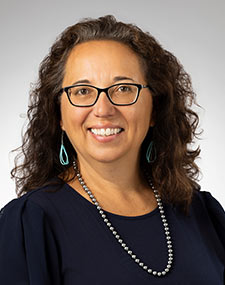
NAGPRA requires Federal agencies and institutions that receive Federal funds to repatriate or transfer Native American human remains and other cultural items to the appropriate parties. Dr. Amy Bergstrom, associate vice president of Inclusive Excellence, explained in a message to the St. Scholastica community in February 2025, “This federal law mandates institutions receiving federal funding to identify and return certain cultural items—including human remains, funerary objects, sacred objects, and objects of cultural patrimony—to their respective tribal nations. It is important to note that the College is not in possession of any human remains. As caretakers of these ancestral items, we are dedicated to fully complying with NAGPRA and engaging in a respectful and transparent dialogue with the relevant tribal representatives.”
A surprising discovery
The items held by the College were gifted over the years and have been displayed for many years in a glass display case within the Jiimaan room on the third floor of Tower Hall. Thanks to the generosity of the Sisters of St. Scholastica Monastery, this room has been designated for the Native Student Alliance group since 1974.
While working on an independent study project, a student began cataloging items in the room, alerting Bergstrom to the discovery of relevant objects that may fall under the NAGPRA federal law. Bergstrom swiftly responded and began the process of reuniting items with their rightful communities, and to do so, it only seemed right to engage with, learn from, and lean on the community. The first step was to reach out to local elders and community members, review the NAGPRA and get direction on next steps.
“Most tribes have what’s called a tribal preservation officer,” Bergstrom said. “So I reached out to the officer at Fond du Lac, asking for help and guidance in this process. Additionally, I reached out to some elders and a Fond du Lac museum director for guidance on how to follow the process. I’ve spent a considerable amount of time meeting with federal officers in Washington, D.C., as well as tribal leaders here in Minnesota. Fond du Lac was very gracious in helping us, spending a day inventorying our collection and assisting us in grouping items. It was then identified that we are, in fact, holding culturally significant items that fall under NAGPRA.”
Ensuring safekeeping and repatriation
Thanks to the help from Fond du Lac, Bergstrom has since shared the inventory of St. Scholastica’s collection with 39 tribal preservation officers in Minnesota, Wisconsin, Michigan, Iowa, and the Dakotas to initiate the repatriation process. The ultimate goal is to ensure the safekeeping of sacred and culturally significant items until the rightful families, tribes, or communities are identified and wish to claim them. To simplify the process, a room in Tower Hall has been designated as the repatriation room, where relevant objects are protected for viewing by interested representatives. The ancestors have been relocated from the Jiimaan room to the repatriation room.
“We are now able to host tribes and preservation officers to view our collection and make claims as they see fit,” Bergstrom explained. “It is our hope that these items all end up where they belong in the communities and with families and tribal members where they belong. I think this is a really good opportunity for our institution, particularly as a Catholic institution, to step forward in the repatriation and reconciliation process so those relationships continue to grow.”
A personal connection
Beyond her lead role in this process, Bergstrom recognizes the weight of personal connections to and the impact of this work: “As an individual who does this work, and also identifies as a Native American woman, there was a time when I had to ground myself because it was disturbing, to some degree, to recognize names on some of these items. At the same time, I was also able to acknowledge what a gift and a privilege it is to be part of this work. The Creator puts us in positions that we don’t always know why and when; I believe that this is an example of that, that I am here in this seat at this time, and this came forward and intersected with my work. I understand that it is a responsibility, not just a professional one, but also a personal one that I need to carry forward, not just on behalf of the College, but on behalf of my ancestors and those who came before me. And I take that responsibility seriously, the extra layer of the personal side of things.”
Healing historical trauma
Bergstrom acknowledged the complicated history that comes with the stewardship of objects gifted and traded. “While we don’t have the details of how items came to be at the College, it is my hope they were gifted in a good way. We recognize, however, the fractured history between institutions and tribal communities and know that things didn’t always happen for the benefit of the tribal communities.”
“Healing historical traumas can happen. I think that the work we’re doing is not just a legal responsibility or a federal requirement, but it’s our Benedictine responsibility. It’s the right thing to do,” Bergstrom expressed. “I’m proud that the College is committed to doing this work the right way, taking ownership of the responsibility and committing wholeheartedly to make sure these items go back home where they belong.”